Oklahoma bill would create penalty schedule for overweight trucks
Drivers of overweight vehicles would face increased fines depending on just how heavily the trucks are loaded, under a bill filed in the Oklahoma Senate.
Sen. Susan Paddack, D-Ada, has again offered legislation for consideration during the upcoming regular session, which would establish seven stages of penalties for vehicles or combinations of vehicles in excess of the gross weight limitations.
In 2008, her bill advanced from the Senate by unanimous consent but missed a deadline to advance from a House committee, effectively killing it for the year.
The renewed effort specifies that trucks found to be overloaded by 700 pounds to 2,000 pounds would face fines of 3 cents for every pound overweight. Violations for trucks weighing between 2,001 pounds and 5,000 pounds more than allowed would face fines of 5 cents per pound.
Fines for trucks found 5,001 pounds to 7,500 pounds overweight would increase to 7 cents per pound. Trucks weighing between 7,501 pounds and 10,000 pounds in excess would face fines of 9 cents per pound.
Violations for trucks weighing between 10,001 pounds and 12,500 pounds more than allowed would be fined 11 cents per pound. Fines would increase to 13 cents per pound for weight violations ranging from 12,501 pounds to 15,000 pounds.
Any trucks found to be 15,001 pounds or more in excess would face fines of 15 cents per pound.
The bill – SB391 – is awaiting assignment to committee for the session that begins Feb. 2.
Wednesday, January 21, 2009

Obama puts hold on 11th-hour regs, including EOBRs
Jan. 21, 2009 – In one of his first moves after taking office, President Barack Obama put a hold on the flurry of regulations issued by the Bush administration in its last days.
In a Tuesday, Jan. 20, memo sent to heads of executive departments and agencies, Obama’s Chief of Staff Rahm Emanuel brought the executives and agency heads up to speed on Obama’s plan for “managing the federal regulatory process.”
In the memo, Emanuel wrote that agency heads appointed by Obama must review any regulation not having cleared the White House Office of Management and Budget during the Bush administration.
One such regulation was a final rule on the mandated use of electronic on-board recorders.
The EOBR – or “black box” – rule was sent to the White House for approval in November 2008 and did not get the needed approval to be published in the Federal Register before Bush left office.
In addition to bringing regs at OMB back in for review, any regulation that Bush’s OMB office had approved but had not published officially in the Federal Register is also on hold waiting for agency review, according to the memo.
Regulations that had cleared the White House and been published in the Federal Register, but had not yet gone into effect were also addressed in the memo.
Specifically for the trucking industry, three new regulations were published in the Federal Register during the last days of the Bush administration. Those include final rules on responsibility for intermodal chassis, driver medical certification verification and the new entrant safety assurance process.
Emanuel’s memo requests that the agencies with final rules that have not gone into effect yet delay the effective date 60 days and open another comment period for 30 days.
None of the three regs affecting the trucking industry have gone into effect, and Washington, DC, insiders expect the leadership at the Federal Motor Carrier Safety Administration and the Department of Transportation to comply with the memo’s request for delay and comment period.
Provided FMCSA and the DOT comply with Obama’s request, the medical certification rule and the new entrant rules would go into effect sometime in April. The intermodal rule would be delayed until August.
In a Tuesday, Jan. 20, memo sent to heads of executive departments and agencies, Obama’s Chief of Staff Rahm Emanuel brought the executives and agency heads up to speed on Obama’s plan for “managing the federal regulatory process.”
In the memo, Emanuel wrote that agency heads appointed by Obama must review any regulation not having cleared the White House Office of Management and Budget during the Bush administration.
One such regulation was a final rule on the mandated use of electronic on-board recorders.
The EOBR – or “black box” – rule was sent to the White House for approval in November 2008 and did not get the needed approval to be published in the Federal Register before Bush left office.
In addition to bringing regs at OMB back in for review, any regulation that Bush’s OMB office had approved but had not published officially in the Federal Register is also on hold waiting for agency review, according to the memo.
Regulations that had cleared the White House and been published in the Federal Register, but had not yet gone into effect were also addressed in the memo.
Specifically for the trucking industry, three new regulations were published in the Federal Register during the last days of the Bush administration. Those include final rules on responsibility for intermodal chassis, driver medical certification verification and the new entrant safety assurance process.
Emanuel’s memo requests that the agencies with final rules that have not gone into effect yet delay the effective date 60 days and open another comment period for 30 days.
None of the three regs affecting the trucking industry have gone into effect, and Washington, DC, insiders expect the leadership at the Federal Motor Carrier Safety Administration and the Department of Transportation to comply with the memo’s request for delay and comment period.
Provided FMCSA and the DOT comply with Obama’s request, the medical certification rule and the new entrant rules would go into effect sometime in April. The intermodal rule would be delayed until August.
Tuesday, January 13, 2009
Truckin' in the Snow
So you think driving in the snow is hard in a car? Take a ride with these guys as they travel in the worst of the worst conditions...
http://www.youtube.com/watch?v=eeORgB9qXyM
http://www.youtube.com/watch?v=0vdQZVZiJ-Y
http://www.youtube.com/watch?v=eeORgB9qXyM
http://www.youtube.com/watch?v=0vdQZVZiJ-Y
International Lonestar - One Kick Ass Truck!
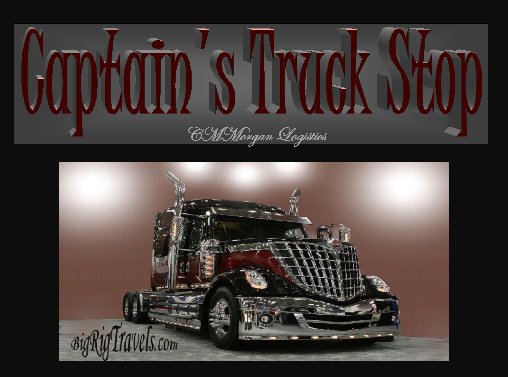
If you like the picture of the truck in my title, watch this video...
http://www.youtube.com/watch?v=TCbln3Giw7k
http://www.youtube.com/watch?v=TCbln3Giw7k
Todays Funny
JB v. The DOT
A JB driver was wandering around the truck stop scale in a panic. A Swift driver walks over and says what is wrong JB. The JB driver replies I am 2,500 lbs over gross and I only have to go 5 miles with it and there is a scale on the way. The Swift driver says well when you get up to the scale cut your lights off and coast on by. The JB driver replies thats a good idea so they part ways. the Swift driver is traveling down the road when he notices the JB driver pulled over by the DOT. The swift driver replies what happened JB the trick didn't work. The DOT replies no but it would have if it would have been night time...
A JB driver was wandering around the truck stop scale in a panic. A Swift driver walks over and says what is wrong JB. The JB driver replies I am 2,500 lbs over gross and I only have to go 5 miles with it and there is a scale on the way. The Swift driver says well when you get up to the scale cut your lights off and coast on by. The JB driver replies thats a good idea so they part ways. the Swift driver is traveling down the road when he notices the JB driver pulled over by the DOT. The swift driver replies what happened JB the trick didn't work. The DOT replies no but it would have if it would have been night time...
TWIC Enforcement at 18 More US Ports
Eighteen U.S. ports began enforcing a new biometric security card required for truckers and other port workers at 18 different ports Tuesday, Jan. 13, as the Transportation Security Administration staggers the new program’s opening throughout the nation.
Ports beginning TWIC enforcement Tuesday include:
Baton Rouge, LA;
Houma, LA;
Lafayette, LA;
Morgan City, LA;
New Orleans;
Port Fourchon, LA;
South Louisiana (in LaPlace, LA);
Key West, FL;
Miami, FL;
Palm Beach, FL;
Port Everglades, FL;
Port Manatee, FL;
Tampa, FL;
Peoria, IL;
St. Louis, MO;
Newport News, VA;
Norfolk, VA; and
Kansas City, MO.
Many of the ports that began enforcement Tuesday are allowing drivers to provide proof that they’ve applied for TWIC due to a lag in TSA’s TWIC processing blamed on a computer problem in fall 2008.
Until Feb. 13, port workers who haven’t yet picked up their activated TWIC card may use alternative ID at ports in the regions of Hampton Roads, VA; Morgan City, LA; New Orleans; Upper Mississippi River, MS; Miami; Key West, FL; and St. Petersburg, FL.
Acceptable proof of activation-ready TWIC cards includes:
Printing the e-mail, sent by TSA during notification process that their TWIC is ready for pick-up.
Providing the facility security officer with the applicant’s TWIC application ID number, which can be checked on www.twicinformation.com.
Provide the facility security officer with the worker’s first and last name. That information will be checked using the password-protected portion of homeport.uscg.mil.
One port that began enforcement Tuesday said it saw few problems in enforcing the new standard.
The Port of New Orleans saw a mix of drivers who either had TWIC cards or proof of TWIC application, or who were escorted into less restricted port areas, one official told Land Line.
“It’s going fairly smoothly – we don’t have any major backups,” said Chris Bonura, Port of New Orleans spokesman. “People are generally coming to the gate either with a card or proof that they’ve applied for the card. Or they’ve made some arrangement for being escorted. A few people who don’t have their documentation together are being turned away.”
The Port of New Orleans has divided the port into two categories: areas defined as secure and as restricted.
While all truckers need a TWIC, those without a TWIC card may be escorted by harbor police in groups of five through designated secure areas, Bonura said. Secure and restricted areas often share the same gate, he said.
Did the down economy combined with TWIC enforcement lead to a drop in truck traffic at the port?
“Generally, we’re going to have the same amount of trucks regardless,” Bonura said.
Escorts for those without TWIC isn’t always as easy. The Courier Post newspaper reported in mid-January that some truckers are hiring TWIC-credentialed escorts for fees ranging from $25 to $150.
The Owner-Operator Independent Drivers Association has been critical of several TSA processes during the TWIC rollout, including the price of enrollment and the ability of foreign nationals to access ports without background checks required by TWIC applicants from the U.S. One filing of the Association’s comments on TWIC can be found here.
Standard TWIC enrollment costs $132.50, although workers with “current, comparable” threat assessment background checks such as hazmat endorsements, Merchant Mariner Documents or Free and Secure Trade (FAST) cards may obtain a TWIC card for $105.25. The card is designed to last five years.
Replacement cards for those who lose or damage their TWIC card cost $60, according to the TWIC Web site at www.tsa.gov/twic.
According to TSA, as of Friday, Jan. 9, nationally there were 801,831 workers enrolled in TWIC. Of those, 734,341 cards have been printed and 578,676 had been activated. About 136,000 truck drivers have enrolled.
Ports beginning TWIC enforcement Tuesday include:
Baton Rouge, LA;
Houma, LA;
Lafayette, LA;
Morgan City, LA;
New Orleans;
Port Fourchon, LA;
South Louisiana (in LaPlace, LA);
Key West, FL;
Miami, FL;
Palm Beach, FL;
Port Everglades, FL;
Port Manatee, FL;
Tampa, FL;
Peoria, IL;
St. Louis, MO;
Newport News, VA;
Norfolk, VA; and
Kansas City, MO.
Many of the ports that began enforcement Tuesday are allowing drivers to provide proof that they’ve applied for TWIC due to a lag in TSA’s TWIC processing blamed on a computer problem in fall 2008.
Until Feb. 13, port workers who haven’t yet picked up their activated TWIC card may use alternative ID at ports in the regions of Hampton Roads, VA; Morgan City, LA; New Orleans; Upper Mississippi River, MS; Miami; Key West, FL; and St. Petersburg, FL.
Acceptable proof of activation-ready TWIC cards includes:
Printing the e-mail, sent by TSA during notification process that their TWIC is ready for pick-up.
Providing the facility security officer with the applicant’s TWIC application ID number, which can be checked on www.twicinformation.com.
Provide the facility security officer with the worker’s first and last name. That information will be checked using the password-protected portion of homeport.uscg.mil.
One port that began enforcement Tuesday said it saw few problems in enforcing the new standard.
The Port of New Orleans saw a mix of drivers who either had TWIC cards or proof of TWIC application, or who were escorted into less restricted port areas, one official told Land Line.
“It’s going fairly smoothly – we don’t have any major backups,” said Chris Bonura, Port of New Orleans spokesman. “People are generally coming to the gate either with a card or proof that they’ve applied for the card. Or they’ve made some arrangement for being escorted. A few people who don’t have their documentation together are being turned away.”
The Port of New Orleans has divided the port into two categories: areas defined as secure and as restricted.
While all truckers need a TWIC, those without a TWIC card may be escorted by harbor police in groups of five through designated secure areas, Bonura said. Secure and restricted areas often share the same gate, he said.
Did the down economy combined with TWIC enforcement lead to a drop in truck traffic at the port?
“Generally, we’re going to have the same amount of trucks regardless,” Bonura said.
Escorts for those without TWIC isn’t always as easy. The Courier Post newspaper reported in mid-January that some truckers are hiring TWIC-credentialed escorts for fees ranging from $25 to $150.
The Owner-Operator Independent Drivers Association has been critical of several TSA processes during the TWIC rollout, including the price of enrollment and the ability of foreign nationals to access ports without background checks required by TWIC applicants from the U.S. One filing of the Association’s comments on TWIC can be found here.
Standard TWIC enrollment costs $132.50, although workers with “current, comparable” threat assessment background checks such as hazmat endorsements, Merchant Mariner Documents or Free and Secure Trade (FAST) cards may obtain a TWIC card for $105.25. The card is designed to last five years.
Replacement cards for those who lose or damage their TWIC card cost $60, according to the TWIC Web site at www.tsa.gov/twic.
According to TSA, as of Friday, Jan. 9, nationally there were 801,831 workers enrolled in TWIC. Of those, 734,341 cards have been printed and 578,676 had been activated. About 136,000 truck drivers have enrolled.
Thursday, January 8, 2009
Mack to Sponsor Skills Challenge in Vegas
Mack Trucks will again sponsor a Driving Skills Safety Challenge during the World of Concrete show in Las Vegas, Feb. 3-5.The competition will be held in the Silver lot #4 next to the Renaissance Hotel outside the Las Vegas Convention Center from 10 a.m. to 4 p.m. each day. Mack will also hold a reception from 3 p.m. to 5 p.m. each day for contestants.The competition is open to any driver at least 18 years of age with a valid CDL who completes an application form, shows proof of operator training, and is registered for the show. This year's event will include individual and team competitions (two operators per team).Contestants will choose one Mack Granite model mixer to operate through a closed course set up to simulate an actual job site. Operators must complete a pre-operation safety check and successfully navigate the skills course. Each individual will have one attempt. Scoring will be based on accuracy and adherence to safety procedures. Specific scoring rules will be provided at the event.First-, second-, and third-place winners will be announced at 4 p.m. on each day of the competition during an awards ceremony. Mack will give away more than $10,000 in prizes during the three-day competition."We think it is important to recognize the contribution drivers make to job site safety every day," said Michael Reardon, Mack vice president of marketing. "It takes real skill and awareness to be safe and productive on a busy and crowded construction site and this competition is one way to highlight the professionalism of mixer truck drivers."
Wednesday, January 7, 2009
Iowa 80 Truck Stop Celebrates 45 Years

Iowa 80 TA Truckstop, located in Walcott, Iowa, will be celebrating its 45th year of serving America's professional drivers in 2009.Standard Oil built and opened the truckstop in 1964. At that time, Iowa 80 had two diesel pumps, one lube bay and a small restaurant. In September 1965, Bill Moon took over management of the truckstop for Standard Oil.In 1984 Bill Moon and his wife Carolyn purchased the truckstop from Amoco and started remodeling and expanding. The shop bays were closed to build state-of-the-art private showers and a driver's area, both of which were very rare in a truckstop at the time. In 1989, Iowa 80 added a new store probably most famous for, other than its chrome selection, the 1918 Oldsmobile hoisted above the cashier island.Three years later, in 1992, Iowa 80 Truckstop expanded its fuel center and became aTruckstops of America franchisee. Truckstops of America would also serve as a connection to the trucking fleets that had grown over the years. And one year later, Iowa 80 opened its TA Service Center.In 2006, a new multi-million dollar Super Truck Showroom was added at Iowa 80 Truckstop. It houses more than 67,000 square feet of chrome, stainless, lights and other trucking accessories to browse. The showroom also includes three big rigs on display that sport the latest accessories and a wall of lights allowing drivers to see what every single type of available light looks like when it's illuminated. A custom shop houses vinyl graphics, custom T-shirts, embroidery center and laser engraving.There are 24 private showers located on the third floor, along with a library, drivers den, movie theater, barber shop, dentist, chiropractor, laundry facilities and a balcony. The food court was also expanded and now includes Wendy's, Taco Bell, Pizza Hut Express and Dairy Queen/Orange Julius. "We are always looking to improve the Iowa 80 experience for our customers," says Delia Moon Meier. "We've expanded Iowa 80 Truckstop 25 times in the last 45 years and we're not ready to slow down yet."More info: www.iowa80truckstop.com
Flooding and Mudslides Close Roads in Washington State
Truckers and motorists traveling in Washington State should be aware that flooding, avalanches and mudslides have been wreaking havoc in a number of regions, state DOT officials said.
The Washington State Department of Transportation warns that a number of roads and passes were closed or faced disruptions during the day on Wednesday, Jan. 7.
Interstate 5 remained open as of press time, but officials were monitoring flood levels and warned that they could close the highway at some point.
For a full list and to access the most current information from WSDOT, click here. The following roads and passes were closed as of midday on Wednesday:
Snoqualmie Pass was closed at midday due to snow, avalanches and mudslides.
State Route 410 was closed in both directions from milepost 9 to milepost 10 during late morning hours.
State Route 547 was closed between milepost 8 and milepost 9 as of 10 a.m.
State Route 542 was closed between milepost 18 and milepost 19 and from milepost 25 to milepost 26 as of 10 a.m.
State Route 20 from milepost 90 to milepost 92 experienced a mudslide at 9:15 a.m.
U.S. 101 was closed from milepost 61 to milepost 62 at 9 a.m. due to flooding.
Officials are urging everyone traveling in the area to know their routes, to check online for detour information, and to use caution.
The Washington State Department of Transportation warns that a number of roads and passes were closed or faced disruptions during the day on Wednesday, Jan. 7.
Interstate 5 remained open as of press time, but officials were monitoring flood levels and warned that they could close the highway at some point.
For a full list and to access the most current information from WSDOT, click here. The following roads and passes were closed as of midday on Wednesday:
Snoqualmie Pass was closed at midday due to snow, avalanches and mudslides.
State Route 410 was closed in both directions from milepost 9 to milepost 10 during late morning hours.
State Route 547 was closed between milepost 8 and milepost 9 as of 10 a.m.
State Route 542 was closed between milepost 18 and milepost 19 and from milepost 25 to milepost 26 as of 10 a.m.
State Route 20 from milepost 90 to milepost 92 experienced a mudslide at 9:15 a.m.
U.S. 101 was closed from milepost 61 to milepost 62 at 9 a.m. due to flooding.
Officials are urging everyone traveling in the area to know their routes, to check online for detour information, and to use caution.
Saturday, January 3, 2009
North Dakota waives HOS rules for fuel haulers
North Dakota Governor John Hoeven has issued a temporary waiver of hours-of-service requirements for drivers who haul diesel fuel in that state.
The waiver, which was issued on Jan. 1, will be in effect until Jan. 14.
Local NBC affiliate KFYR reports that North Dakota has been facing a diesel shortage this year, thanks to soaring demand brought on by extremely cold weather.
In addition, two refineries in Montana were hit by fires last week, which slowed production and forced states like North Dakota to truck in fuel from as far away as Wyoming or Denver.
Some fear that the supply problems could lead to a diesel price spike in North Dakota.
ProMiles was showing the average there on Friday morning at $2.47 a gallon. That’s 15 cents above the national average of $2.32 a gallon.
North Dakota Governor John Hoeven has issued a temporary waiver of hours-of-service requirements for drivers who haul diesel fuel in that state.
The waiver, which was issued on Jan. 1, will be in effect until Jan. 14.
Local NBC affiliate KFYR reports that North Dakota has been facing a diesel shortage this year, thanks to soaring demand brought on by extremely cold weather.
In addition, two refineries in Montana were hit by fires last week, which slowed production and forced states like North Dakota to truck in fuel from as far away as Wyoming or Denver.
Some fear that the supply problems could lead to a diesel price spike in North Dakota.
ProMiles was showing the average there on Friday morning at $2.47 a gallon. That’s 15 cents above the national average of $2.32 a gallon.
Missing Driver OOIDA Member
FOUND
Authorities from the Opp, AL, Police Department have issued an Overdue Motorist Report for OOIDA Member Darrell Wayne Barnes Jr., a truck driver and resident of Opp.
Barnes was en route to Stafford, MA, and last heard from on Tuesday, Dec. 30. At that time, he was reportedly in Roanoke, VA.
Barnes is a white male, 6 feet 1 inch tall, weighs 275 pounds, usually wears an OOIDA ball cap. He was born Jan. 27, 1959.
He is driving a lightning-blue 2003 Freightliner Classic XL with “LA Wolf” and AFL on each door. The tractor has two lightning bolts across the hood. The Freightliner has Alabama registration number 1031798. Barnes is pulling a rented TIP 53-foot dry box trailer white in color; tag unknown.
If you have information on his whereabouts or have seen the truck, call Officer Walter Inabinett at 334-493-4511 of the Opp Police Department. You can also call OOIDA’s Security Officer Doug Morris at 202-246-2698 (available 24/7).
Authorities from the Opp, AL, Police Department have issued an Overdue Motorist Report for OOIDA Member Darrell Wayne Barnes Jr., a truck driver and resident of Opp.
Barnes was en route to Stafford, MA, and last heard from on Tuesday, Dec. 30. At that time, he was reportedly in Roanoke, VA.
Barnes is a white male, 6 feet 1 inch tall, weighs 275 pounds, usually wears an OOIDA ball cap. He was born Jan. 27, 1959.
He is driving a lightning-blue 2003 Freightliner Classic XL with “LA Wolf” and AFL on each door. The tractor has two lightning bolts across the hood. The Freightliner has Alabama registration number 1031798. Barnes is pulling a rented TIP 53-foot dry box trailer white in color; tag unknown.
If you have information on his whereabouts or have seen the truck, call Officer Walter Inabinett at 334-493-4511 of the Opp Police Department. You can also call OOIDA’s Security Officer Doug Morris at 202-246-2698 (available 24/7).
Thursday, January 1, 2009
Ol' Blue USA
While searching the net for valuable safety information, I came across a website that I absolutely loved. http://www.olblueusa.org This site has everything from safety clips to regulation updates. It is well worth checking out. And for the little ones in the family, there is even an online coloring book and story book! I know you will love it too so check it out!
California Bans Texting in All Vehicles January 1st
Starting Jan. 1, adults in California will be prohibited from text messaging while driving. Teens under 18 already are prohibited from using any type of cell phone, pager, text messaging device or laptop while at the wheel.
The new law complements an existing law that took effect July 1, which requires drivers to use hands-free devices while chatting on the phone.
Intended to reduce distractions for drivers, Gov. Arnold Schwarzenegger signed the “texting” ban this year in an effort to remove a loophole that allowed adults to use hand-held devices to send, receive or read text messages while driving.
As is the case for violating the cell phone restriction, police will be allowed to pull over adults found texting. Violators would face at least $20 fines. Subsequent offenses would result in up to $50 fines.
Efforts to curb the practice of using electronic wireless devices, such as a Blackberry-type device, while driving have picked up steam across the country following the release of a Nationwide Mutual Insurance survey that found one in five drivers texting while driving. Nearly three-quarters of drivers use cell phones.
California, Connecticut, New York, New Jersey and Washington are the only states that have bans on all drivers using hand-held phones. The New Jersey and Washington state laws also prohibit text messaging. Alaska and Minnesota recently approved their own bans on text messaging.
The new law complements an existing law that took effect July 1, which requires drivers to use hands-free devices while chatting on the phone.
Intended to reduce distractions for drivers, Gov. Arnold Schwarzenegger signed the “texting” ban this year in an effort to remove a loophole that allowed adults to use hand-held devices to send, receive or read text messages while driving.
As is the case for violating the cell phone restriction, police will be allowed to pull over adults found texting. Violators would face at least $20 fines. Subsequent offenses would result in up to $50 fines.
Efforts to curb the practice of using electronic wireless devices, such as a Blackberry-type device, while driving have picked up steam across the country following the release of a Nationwide Mutual Insurance survey that found one in five drivers texting while driving. Nearly three-quarters of drivers use cell phones.
California, Connecticut, New York, New Jersey and Washington are the only states that have bans on all drivers using hand-held phones. The New Jersey and Washington state laws also prohibit text messaging. Alaska and Minnesota recently approved their own bans on text messaging.
Pennsylvania Toll Increase - Effective Sunday 1/4/2009
Operators of Class 8 trucks traveling the full length of the Pennsylvania Turnpike will pay an extra $35 in tolls starting on Sunday, Jan. 4.
Officials said a scheduled 25 percent toll increase takes effect at 12:01 a.m., Sunday, Jan. 4.
Turnpike officials say the increase is justified because it is anticipated to generate an additional $119.2 million per year, bringing annual turnpike revenue to $738.4 million.
Current transportation law in Pennsylvania, known as Act 44, allows turnpike revenue to be used for other statewide transportation needs including roads, bridges and mass transit.
Officials with the Owner-Operator Independent Drivers Association believe Act 44 should be repealed and that toll revenue should not be siphoned away for mass transit projects. Act 44 is also the law that gave Pennsylvania officials a crack at tolling Interstate 80. As of the end of 2008, that bid has been unsuccessful.
The maximum toll for truckers traveling 358 miles from the Ohio border to the Delaware River Bridge on the turnpike’s main line will be $175 and an extra $18.75 at the Gateway Toll Plaza, up from the current rate of $140 on the main line and $15 at the Gateway plaza.
Tolls are guaranteed to increase 3 percent each year under Act 44.
Officials said a scheduled 25 percent toll increase takes effect at 12:01 a.m., Sunday, Jan. 4.
Turnpike officials say the increase is justified because it is anticipated to generate an additional $119.2 million per year, bringing annual turnpike revenue to $738.4 million.
Current transportation law in Pennsylvania, known as Act 44, allows turnpike revenue to be used for other statewide transportation needs including roads, bridges and mass transit.
Officials with the Owner-Operator Independent Drivers Association believe Act 44 should be repealed and that toll revenue should not be siphoned away for mass transit projects. Act 44 is also the law that gave Pennsylvania officials a crack at tolling Interstate 80. As of the end of 2008, that bid has been unsuccessful.
The maximum toll for truckers traveling 358 miles from the Ohio border to the Delaware River Bridge on the turnpike’s main line will be $175 and an extra $18.75 at the Gateway Toll Plaza, up from the current rate of $140 on the main line and $15 at the Gateway plaza.
Tolls are guaranteed to increase 3 percent each year under Act 44.

Subscribe to:
Posts (Atom)