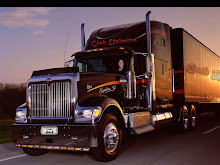
North Dakota waives HOS rules for fuel haulers
North Dakota Governor John Hoeven has issued a temporary waiver of hours-of-service requirements for drivers who haul diesel fuel in that state.
The waiver, which was issued on Jan. 1, will be in effect until Jan. 14.
Local NBC affiliate KFYR reports that North Dakota has been facing a diesel shortage this year, thanks to soaring demand brought on by extremely cold weather.
In addition, two refineries in Montana were hit by fires last week, which slowed production and forced states like North Dakota to truck in fuel from as far away as Wyoming or Denver.
Some fear that the supply problems could lead to a diesel price spike in North Dakota.
ProMiles was showing the average there on Friday morning at $2.47 a gallon. That’s 15 cents above the national average of $2.32 a gallon.
Saturday, January 3, 2009

Missing Driver OOIDA Member
FOUND
Authorities from the Opp, AL, Police Department have issued an Overdue Motorist Report for OOIDA Member Darrell Wayne Barnes Jr., a truck driver and resident of Opp.
Barnes was en route to Stafford, MA, and last heard from on Tuesday, Dec. 30. At that time, he was reportedly in Roanoke, VA.
Barnes is a white male, 6 feet 1 inch tall, weighs 275 pounds, usually wears an OOIDA ball cap. He was born Jan. 27, 1959.
He is driving a lightning-blue 2003 Freightliner Classic XL with “LA Wolf” and AFL on each door. The tractor has two lightning bolts across the hood. The Freightliner has Alabama registration number 1031798. Barnes is pulling a rented TIP 53-foot dry box trailer white in color; tag unknown.
If you have information on his whereabouts or have seen the truck, call Officer Walter Inabinett at 334-493-4511 of the Opp Police Department. You can also call OOIDA’s Security Officer Doug Morris at 202-246-2698 (available 24/7).
Authorities from the Opp, AL, Police Department have issued an Overdue Motorist Report for OOIDA Member Darrell Wayne Barnes Jr., a truck driver and resident of Opp.
Barnes was en route to Stafford, MA, and last heard from on Tuesday, Dec. 30. At that time, he was reportedly in Roanoke, VA.
Barnes is a white male, 6 feet 1 inch tall, weighs 275 pounds, usually wears an OOIDA ball cap. He was born Jan. 27, 1959.
He is driving a lightning-blue 2003 Freightliner Classic XL with “LA Wolf” and AFL on each door. The tractor has two lightning bolts across the hood. The Freightliner has Alabama registration number 1031798. Barnes is pulling a rented TIP 53-foot dry box trailer white in color; tag unknown.
If you have information on his whereabouts or have seen the truck, call Officer Walter Inabinett at 334-493-4511 of the Opp Police Department. You can also call OOIDA’s Security Officer Doug Morris at 202-246-2698 (available 24/7).
Thursday, January 1, 2009
Ol' Blue USA
While searching the net for valuable safety information, I came across a website that I absolutely loved. http://www.olblueusa.org This site has everything from safety clips to regulation updates. It is well worth checking out. And for the little ones in the family, there is even an online coloring book and story book! I know you will love it too so check it out!
California Bans Texting in All Vehicles January 1st
Starting Jan. 1, adults in California will be prohibited from text messaging while driving. Teens under 18 already are prohibited from using any type of cell phone, pager, text messaging device or laptop while at the wheel.
The new law complements an existing law that took effect July 1, which requires drivers to use hands-free devices while chatting on the phone.
Intended to reduce distractions for drivers, Gov. Arnold Schwarzenegger signed the “texting” ban this year in an effort to remove a loophole that allowed adults to use hand-held devices to send, receive or read text messages while driving.
As is the case for violating the cell phone restriction, police will be allowed to pull over adults found texting. Violators would face at least $20 fines. Subsequent offenses would result in up to $50 fines.
Efforts to curb the practice of using electronic wireless devices, such as a Blackberry-type device, while driving have picked up steam across the country following the release of a Nationwide Mutual Insurance survey that found one in five drivers texting while driving. Nearly three-quarters of drivers use cell phones.
California, Connecticut, New York, New Jersey and Washington are the only states that have bans on all drivers using hand-held phones. The New Jersey and Washington state laws also prohibit text messaging. Alaska and Minnesota recently approved their own bans on text messaging.
The new law complements an existing law that took effect July 1, which requires drivers to use hands-free devices while chatting on the phone.
Intended to reduce distractions for drivers, Gov. Arnold Schwarzenegger signed the “texting” ban this year in an effort to remove a loophole that allowed adults to use hand-held devices to send, receive or read text messages while driving.
As is the case for violating the cell phone restriction, police will be allowed to pull over adults found texting. Violators would face at least $20 fines. Subsequent offenses would result in up to $50 fines.
Efforts to curb the practice of using electronic wireless devices, such as a Blackberry-type device, while driving have picked up steam across the country following the release of a Nationwide Mutual Insurance survey that found one in five drivers texting while driving. Nearly three-quarters of drivers use cell phones.
California, Connecticut, New York, New Jersey and Washington are the only states that have bans on all drivers using hand-held phones. The New Jersey and Washington state laws also prohibit text messaging. Alaska and Minnesota recently approved their own bans on text messaging.
Pennsylvania Toll Increase - Effective Sunday 1/4/2009
Operators of Class 8 trucks traveling the full length of the Pennsylvania Turnpike will pay an extra $35 in tolls starting on Sunday, Jan. 4.
Officials said a scheduled 25 percent toll increase takes effect at 12:01 a.m., Sunday, Jan. 4.
Turnpike officials say the increase is justified because it is anticipated to generate an additional $119.2 million per year, bringing annual turnpike revenue to $738.4 million.
Current transportation law in Pennsylvania, known as Act 44, allows turnpike revenue to be used for other statewide transportation needs including roads, bridges and mass transit.
Officials with the Owner-Operator Independent Drivers Association believe Act 44 should be repealed and that toll revenue should not be siphoned away for mass transit projects. Act 44 is also the law that gave Pennsylvania officials a crack at tolling Interstate 80. As of the end of 2008, that bid has been unsuccessful.
The maximum toll for truckers traveling 358 miles from the Ohio border to the Delaware River Bridge on the turnpike’s main line will be $175 and an extra $18.75 at the Gateway Toll Plaza, up from the current rate of $140 on the main line and $15 at the Gateway plaza.
Tolls are guaranteed to increase 3 percent each year under Act 44.
Officials said a scheduled 25 percent toll increase takes effect at 12:01 a.m., Sunday, Jan. 4.
Turnpike officials say the increase is justified because it is anticipated to generate an additional $119.2 million per year, bringing annual turnpike revenue to $738.4 million.
Current transportation law in Pennsylvania, known as Act 44, allows turnpike revenue to be used for other statewide transportation needs including roads, bridges and mass transit.
Officials with the Owner-Operator Independent Drivers Association believe Act 44 should be repealed and that toll revenue should not be siphoned away for mass transit projects. Act 44 is also the law that gave Pennsylvania officials a crack at tolling Interstate 80. As of the end of 2008, that bid has been unsuccessful.
The maximum toll for truckers traveling 358 miles from the Ohio border to the Delaware River Bridge on the turnpike’s main line will be $175 and an extra $18.75 at the Gateway Toll Plaza, up from the current rate of $140 on the main line and $15 at the Gateway plaza.
Tolls are guaranteed to increase 3 percent each year under Act 44.

Tuesday, December 30, 2008


Mid America Trucking Show
Have you registered yet?
Mid America Trucking Show
March 19-21, 2009
Kentucky Expo Center
Louisville, KY
To Register Visit: http://truckingshow.com/
Mid America Trucking Show
March 19-21, 2009
Kentucky Expo Center
Louisville, KY
To Register Visit: http://truckingshow.com/
Operation Safe Driver Results from 2008
The Commercial Vehicle Safety Alliance and the Federal Motor Carrier Safety Administration are driving down the number of deaths on our highways resulting from poor driving behaviors of car, truck and bus drivers through the Operation Safe Driver campaign.Conducted across North America Oct. 20-25, 2008, the week-long blitz included 4,321 law enforcement personnel at 1,332 localities in 31 states and several Canadian provinces."We know there are a small portion of high-risk drivers causing most of the crashes related to large trucks and buses," said CVSA Executive Director Stephen F. Campbell. "Operation Safe Driver focuses our enforcement resources on these high-risk operators, while at the same time offering educational tools to the motoring public at large on how to drive more safely around trucks and buses."According to crash data analyzed by FMCSA, 88 percent of crashes involving large trucks cite driver behaviors - whether it was the car, truck or bus - were cited as a factor in the crash. The Operation Safe Driver campaign was created last year to address this problem and take aggressive enforcement action on car, bus and truck drivers to prevent deaths.Many educational and awareness events by government and industry were conducted in conjunction at different driver activities/events and population types. Activities included three international media events across the U.S., driver outreach events, No-Zone and Share the Road programs, distributing educational brochures and producing a podcast for CVSA's In the Safety Lane. In addition, a number of states conducted their TACT (Ticketing Aggressive Cars and Trucks) operation during the week.During 2008 Operation Safe Driver, 32,708 commercial vehicle roadside inspections were conducted, with 22.9 percent of Level 1 inspections resulting in the vehicles being placed out of service and 5.3 percent resulting in the driver being placed out of service. (This compares to 2007 figures of 20,523 inspections conducted and a driver OOS rate of 10.2 percent.)There were 16,784 CMV Driver Traffic Enforcement Contacts, resulting in 6,143 citations and 3,247 warnings being issued. There were 11,151 Non-CMV Driver Traffic Enforcement Contacts, with 8,405 citations issues and 1,808 warnings.In addition, 42 targeted Compliance Reviews on truck and motorcoach operations were conducted by FMCSA personnel on motor carriers employing the "worst of the worst" commercial drivers: Nine carriers (or 21.4 percent of the total reviews) received a Conditional Safety Rating. (The national average of carriers rated Conditional in 2007 was 26.7 percent). Four carriers (or 9.5 percent of the total reviews) receiving an Unsatisfactory Safety Rating. (The national average of carriers rated unsatisfactory in 2007 was 5.5 percent.)
California Meal/Break Reg Applies to Commercial Drivers
The Federal Motor Carrier Safety Administration rejected a petition to exempt commercial vehicle drivers subject to federal hours of service regulation from the California laws and regulations requiring employers to provide employees with meal and rest breaks.The agency ruled that petition does not satisfy the threshold requirement for preemption under 49 U.S.C. 31141(c) because the provisions at issue are not "laws and regulations on commercial motor vehicle safety," but rather laws and regulations applied generally to California employers.On July 3, 2008, James H. Hanson, Esq., Scopelitis, Garvin, Light, Hanson & Feary, P.C., petitioned the Federal Motor Carrier Safety Administration on behalf of a group of motor carriers to preempt the California statutes and rules requiring transportation industry employers to give their employees meal and rest breaks during the work day, as applied to drivers of commercial motor vehicles subject to the FMCSA hours-of-service regulations.The petitioners argued that "motor carrier operations are carefully timed to take advantage of the flexibility available under the HOS Regulations and, in some instances, to take advantage of the full complement of driving hours provided as well. Some carriers schedule driver meals to take place at carrier facilities once the driver has delivered a load so that unloading, sorting, and loading of outbound shipments can take place during the break. The Meal and Rest Break Rules, by mandating when meals breaks must be taken, interfere with such arrangements, meaning that the driver will miss the inbound appointment, which in turn has the domino effect of delaying outbound operations."In addition, they noted that because drivers must find a place to pull over, park and shut down their equipment before the break can start, "as a practical matter, the Meal and Rest Break Rules impose a much greater burden on the driver than a simple reading of the rules ... would at first suggest, and the burden is exacerbated in congested areas."You can read the full notice in the Federal Register here.
Schneider training Acedemy to Close it's Doors
While most schools in the nation are still on their winter break, the driving schools at Schneider National are taking a permanent vacation.
The Milwaukee Journal Sentinel reports that the company is shutting the doors on the Schneider Training Academy and will now fill its driver positions exclusively with veteran drivers. That’s something the company has not done since the mid-1980s.
Don Osterberg, vice president of safety and driver training for the Green Bay, WI-based trucking company, told the Journal Sentinel that it costs the company about $8,000 dollars and 45 days to train an inexperienced driver. An experienced driver can go to work for the company in about four days at a cost of $1,500 dollars.
Joe Rajkovacz, regulatory affairs specialist for OOIDA and himself a former trainer for Schneider, says that this move is just another sign of the tough economic times we face.
“For years, the motor carrier industry has propagated the myth of a driver shortage,” said Rajkovacz. “This move demonstrates that a driver shortage does not exist in this economy and that motor carriers can readily meet their staffing requirements with experienced and veteran drivers without expending considerable financial resources training new drivers.”
The Milwaukee Business Journal reports that the 52 driver trainers currently employed with the training school will be reassigned to truck driving duties by Jan. 5, though there is a possibility that some of them could be laid off.
The Milwaukee Journal Sentinel reports that the company is shutting the doors on the Schneider Training Academy and will now fill its driver positions exclusively with veteran drivers. That’s something the company has not done since the mid-1980s.
Don Osterberg, vice president of safety and driver training for the Green Bay, WI-based trucking company, told the Journal Sentinel that it costs the company about $8,000 dollars and 45 days to train an inexperienced driver. An experienced driver can go to work for the company in about four days at a cost of $1,500 dollars.
Joe Rajkovacz, regulatory affairs specialist for OOIDA and himself a former trainer for Schneider, says that this move is just another sign of the tough economic times we face.
“For years, the motor carrier industry has propagated the myth of a driver shortage,” said Rajkovacz. “This move demonstrates that a driver shortage does not exist in this economy and that motor carriers can readily meet their staffing requirements with experienced and veteran drivers without expending considerable financial resources training new drivers.”
The Milwaukee Business Journal reports that the 52 driver trainers currently employed with the training school will be reassigned to truck driving duties by Jan. 5, though there is a possibility that some of them could be laid off.
Subscribe to:
Posts (Atom)